A contemporary art museum in Madrid, Spain once faced a reception problem: During peak seasons, there were 10 teams visiting the exhibition hall simultaneously, and the frequency of the ordinary wireless audio guides was extremely high. The voices of Spanish, English, and Japanese explanations mixed together, which not only disrupted the quiet atmosphere of the museum but also caused tourists to miss the artistic interpretations behind the works. What was even more challenging was that the museum received a large number of Latin American tourists, and it needed to adapt to Spanish dialects and Portuguese. However, the original equipment could not be customized for minority languages, and the cross-border after-sales response would take more than a month. It was not until the Yingmi wireless audio guide was replaced that 150 independent channels completely solved the frequency interference problem. Within 18 days, the adaptation for 3 minority languages was completed, and the tourist satisfaction rate directly increased by 62%.
For museums with the mission of cultural dissemination, a reliable wireless audio guide is the core bridge connecting tourists and exhibits. Especially for foreign museums facing a large number of international tourists, complex scene requirements, and high cross-border service demands, choosing a brand that is suitable is even more crucial. Yingmi, which has been deeply involved in the industry for 19 years, with a deep understanding of museum scenarios and global service capabilities, has become the preferred choice for 1200+ museums in 50+ countries. Below, we will explain in detail why Yingmi is the ideal choice for museums from the perspectives of pain points, products, and solutions.
I. Pain Points of Interpretation in Foreign Museums, Ordinary Equipment Cannot Handle Them
The reception scenarios of foreign museums have the characteristics of "a large number of international tourists, many concurrent teams, and high service standards". The shortcomings of ordinary wireless interpretation devices are magnified infinitely, and the core pain points are concentrated in the following 6 points:1. Multiple teams sharing frequencies ruin the experience: During peak seasons in popular exhibition halls, there are often more than 10 teams visiting simultaneously. Ordinary devices have few channels and weak anti-interference capabilities. The voices of different teams interfere with each other, making it difficult for tourists to understand the core content. The interpreters need to repeat themselves repeatedly, doubling the workload, and disrupting the quiet atmosphere of the museum.
2. Incomplete multilingual coverage: The proportion of international tourists is generally over 40%, but ordinary devices only support 3-5 commonly used languages. For small language requirements in Latin America, the Middle East, etc., intermediaries cannot connect with the production end, resulting in some tourists being able to "just watch for fun", and the cultural dissemination effect is greatly reduced.
3. Equipment management and hygiene problems: With an average daily reception of over a thousand visitors, charging, storage, and disinfection of the equipment have become major problems. Ordinary devices have falsely marked battery life, claiming 10 hours but actually only being usable for 5 hours. Midway power outages disrupt the visiting rhythm; shared equipment for multiple people lacks professional disinfection design, posing hygiene risks, and causing obvious resistance from tourists.
4. Intermediary markup + customization delay: Purchased through trading companies, each layer of agent will extract 15%-30% profit. The price difference for bulk purchases is astonishing. Museums need to have requirements such as printing logos on the equipment and customizing exclusive audio for exhibits, but intermediaries have no production autonomy. The feedback cycle is as long as 45 days, and they often receive additional price hikes.
5. Lack of compliance certification and difficult customs clearance: In regions such as the EU and the Middle East, there are strict CE and RoHS certification requirements for electronic devices. The certification documents provided by ordinary manufacturers are incomplete or inconsistent, making the devices prone to being detained at the port, resulting in high detention fees and inspection costs, and causing delays in reception and use.
6. Slow cross-border after-sales response: After equipment malfunctions, intermediaries cannot handle them directly and need to be relayed to the source manufacturer. The cross-border repair cycle is as long as 1-2 months. During peak reception periods, equipment shortages will directly affect the normal operation of the museum.
The core of these pain points is that ordinary equipment and intermediaries cannot meet the professional scene requirements of museums. They can only simply resell products, while reliable brand manufacturers can directly connect from the production end to the service end, implementing "professional adaptation" and "cost control" in practice.

II. Exclusive Recommendations for Exhibition Halls: Yingmi M7C All-in-One Model, Suitable for All Scenarios in Museums
Yingmi, as a national-level high-tech enterprise, has built its own SMT assembly factory and 4 automated production lines. All products are independently controlled from R&D to shipment throughout the process. Each device undergoes 5-level tests including anti-interference, battery life, wear resistance, temperature range, and batch compatibility. For the core needs of museums, the M7C automatic sensing + team interpretation system has become a popular purchase choice for international museums, having served over 1,000 museums including the French Louvre branch and the UAE National Museum, and is considered a "universal interpretation tool" for museums.
(1) Anti-interference + Precise Sensing, Matching Exhibition Hall Characteristics
M7C adopts Yingmi's patented RFID modulation technology, supporting 150 independent channels. The spacing between adjacent channels is optimized to 200 kHz. Even if 15 teams are explaining simultaneously in the same exhibition hall, they can avoid interfering with each other, completely solving the noise interference problem caused by concurrent teams. Considering the characteristics of museums, such as "dense exhibits and diverse spaces", the device can precisely adjust the sensing distance from 0.5 meters to 35 meters: in exhibition halls with dense exhibits, it can be set to 0.5 meters to avoid false triggering; in open special exhibition areas or historical site exhibition halls, it can be adjusted to 35 meters to achieve "sound when people arrive, sound stops when people leave" precise guiding. More thoughtfully, for scenarios with an extremely dense display of exhibits, M7C also supports a touch mode. Tourists can simply touch the label to precisely play the corresponding explanation, completely eliminating interference from adjacent exhibits and ensuring that every piece of cultural story can be accurately conveyed. The signal transmission is stable, with a connection failure rate of less than 0.2%. Even in multi-level exhibition halls or underground cultural exhibition areas, the explanations can be clear and without lag.(2) Full multilingual coverage, catering to the needs of international tourists
M7C is equipped with 8 commonly used languages such as English, French, German, Japanese, and Korean as standard. As the original manufacturer, Yingmi can directly undertake the customization of any niche language without going through intermediaries. Museums only need to provide clear audio or text explanations, and the system can be completed within 18 days, without incurring additional customization fees. For example, for Spanish dialects for tourists from Latin America or Arabic for the Middle East, they can be precisely adapted.In terms of sound quality, it is equipped with SOC embedded digital noise reduction technology, which can intelligently filter out environmental noises such as ventilation in the exhibition hall and low murmurs of the crowd, so that tourists can clearly hear the detailed explanations of cultural relics - such as the brushstroke characteristics of Renaissance paintings, the manufacturing techniques of ancient artifacts, and the creative concepts of contemporary artworks, allowing international tourists to deeply experience the cultural charm.
(3) Intelligent management + hygiene design, solving the operational problems of exhibition halls
The ultraviolet disinfection charging box equipped with M7C perfectly solves the pain points of equipment management in museums: it can simultaneously charge 30 devices and disinfect through ultraviolet and ozone dual methods. It can kill 99.99% of bacteria in 15 minutes. The disinfection records can be traced, completely eliminating hygiene concerns of multiple people sharing. The charging box is equipped with an intelligent management system that can display the battery level and disinfection status of each device in real time. Administrators do not need to check each device one by one, significantly improving management efficiency.The battery life fully meets the needs of all-day operation of exhibition halls. The receiver can be used continuously for 11 hours after a single charge, and the transmitter has a battery life of up to 15 hours. With the charging box, the entire set of equipment can be fully charged in 2 hours. During peak seasons, there is no need to worry about power outages. The device weighs only 20 grams and adopts a soft ear-clip design, allowing tourists to wear it for a long time without feeling burdened. The body supports printing of museum logos to enhance brand recognition, making the explainer an extension of cultural dissemination.
(4) Complete compliance certifications, no pressure in cross-border procurement
M7C has passed EU CE, RoHS environmental certifications and Chinese CMA, CNAS dual inspections. It can provide complete certification documents, manufacturer's compliance declaration (DoC), and technical drawings to ensure smooth customs clearance in most countries around the world. For different regional special requirements, it can also apply for regional certifications such as Egyptian NTRA, North American FCC-ID, etc., completely resolving compliance concerns of foreign museums.(5) Ideal for small exhibition halls: L8 lightweight explainer
For small and distinctive museums with fewer exhibits and moderate visitor traffic (such as local folk culture exhibition halls, thematic art exhibition halls), Yingmi L8 lightweight explainer is a cost-effective choice. The device is extremely lightweight, with the transmitter weighing only 35 grams and the receiver 16 grams, allowing tourists to wear it without any burden. It supports 64 independent channels to meet the needs of multiple teams in small exhibition halls. The operation is simple, and it automatically pairs upon startup, allowing tourists to select explanations by inputting the exhibit number without complex learning.L8 also supports multilingual customization and EU CE, RoHS certifications. It is paired with a small charging box that can charge 10 devices simultaneously, is convenient to store and does not occupy exhibition space. The charging equipment supports a wide voltage range of 100V-240V, can be used directly in different countries around the world, and can be ordered with 10 units, suitable for budget-limited small museum purchases.
III. Yingmi Comprehensive Solution: Making Museum Operations More Stress-Free
The reason why Yingmi has become the preferred choice for international museums lies not only in its strong product capabilities, but also in the establishment of a complete chain service system from procurement to after-sales, which completely resolves the cross-border usage concerns of foreign museums.
(1) Direct Supply from the Source, Reducing Procurement Costs
As the source manufacturer, Yingmi eliminates all intermediary agency links, and the direct supply price of the M7C basic set (1 transmitter + 30 receivers) is 28% lower than that of the middlemen. With 4 automated production lines, the monthly production capacity exceeds 20,000 units. Whether it's a thousand-unit batch order or a few dozen units of small custom orders, it can respond quickly and the delivery cycle is shortened by 50% compared to the industry standard. During peak seasons, replenishment can be delivered within 7 days, fully meeting the sudden reception needs of museums.(2) Customized Services, Tailored to the Exclusive Needs of Museums
In addition to multilingual customization, Yingmi can also provide full-dimensional customized services for museums: In terms of content, it supports detailed customization of audio for exhibit explanations (highlighted version, in-depth version, youth version), meeting the needs of different groups; In terms of functions, it can adjust the duration and volume limit of explanations according to the exhibition scenario, such as lowering the volume threshold for children's exhibitions and setting up loop playback for special exhibitions; In terms of appearance, starting from 100 units, the logo of the museum can be printed on the body, the shell color can be adjusted, and even an exclusive appearance can be designed through mold.(3) Cross-border Logistics and After-sales, Service Not Interrupted
In terms of logistics, Yingmi has long-term cooperation with international logistics companies such as DHL and FedEx. Regular orders can be delivered within 7-10 days, and urgent orders can be dispatched quickly within 2-3 days. For batch orders, multiple logistics solutions such as sea and air transportation can be provided, and the museum's needs can be flexibly selected to reduce logistics costs. The entire logistics status can be tracked.In terms of after-sales, Yingmi has established a "9G Full Lifecycle Service" system: Pre-sales can respond within 90 seconds, provide free sample testing, and assist museums in confirming product compatibility; During the sales process, it provides multilingual operation manuals and remote debugging guidance to assist staff in quickly getting started; After-sales support offers 1-year free warranty and unconditional replacement within 3 months for quality issues. A multilingual service platform is built, and museums can quickly report repairs through channels such as WhatsApp and email, with global engineers responding within 1 hour, and emergency spare parts being sent across borders within 72 hours. The repair success rate reaches 98%.
(4) Equipment Management Optimization, Enhancing Operational Efficiency
In response to the equipment management needs of museums, Yingmi also provides complementary value-added services: The intelligent charging and disinfection integrated cabinet supports 24-hour unmanned operation, allowing visitors to scan to rent and return equipment, automatically completing charging and disinfection, saving labor costs; The remote management system enables administrators to monitor the power, usage status, and location distribution of all equipment in real time through a computer or mobile phone, generating data reports to provide a basis for optimizing exhibit explanation layouts and adjusting the number of equipment placements; Earplugs and earpieces can be delivered globally within 3-5 days, with low replacement costs.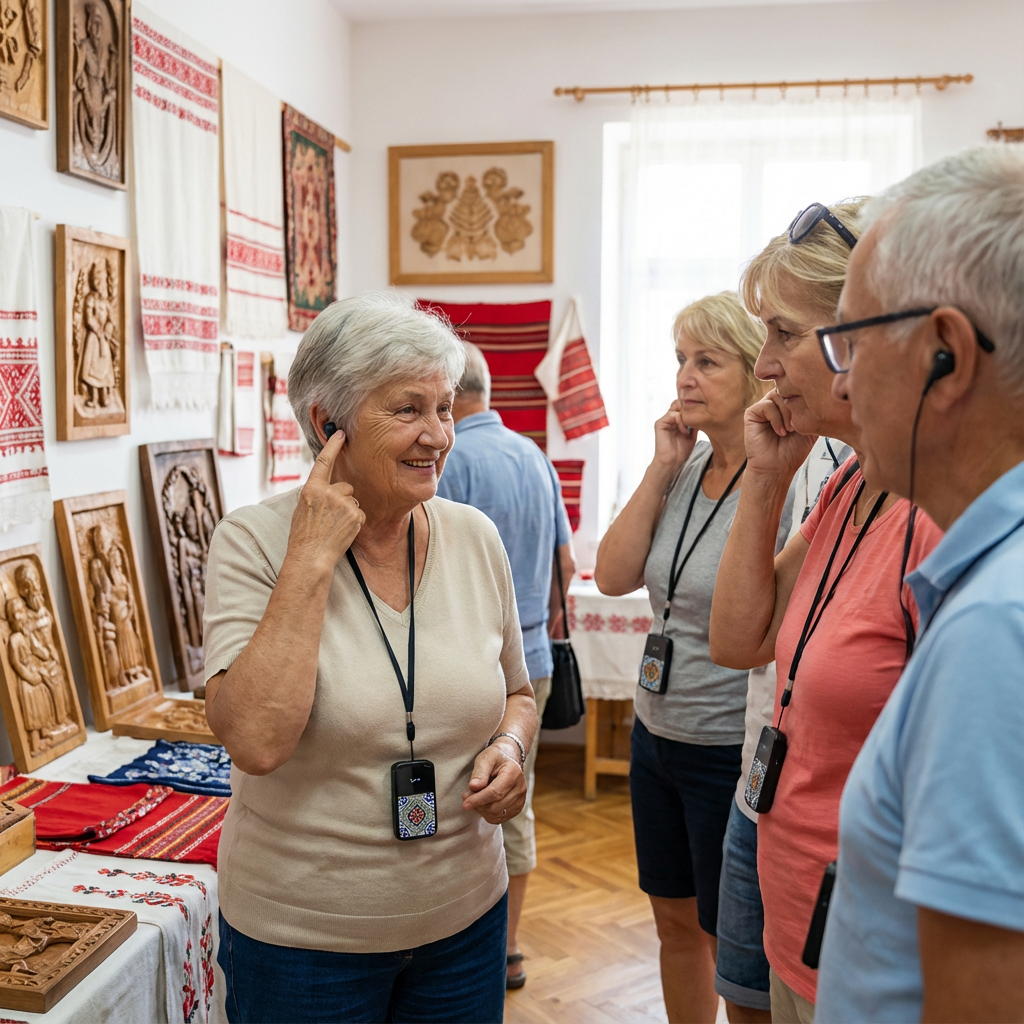
IV. Choose Yingmi, Make Cultural Communication More Precise and Efficient
For 19 years, Yingmi has been dedicated to the research and production of museum wireless audio guides. It deeply understands the procurement needs of museums, which prioritize "cultural communication", focus on "professional adaptation", and aim for "cost control". From the technical expertise of its own factory to the global service network layout, every step is centered around "making the purchase of foreign museum audio guides simpler and the use more worry-free".For foreign museums, choosing Yingmi is not just about purchasing a batch of audio guides, but rather selecting a "full-chain solution from production to after-sales service". Without having to deal with the incremental price increases and procrastination from middlemen, directly connecting with the factory, you can not only obtain cost-effective products but also enjoy personalized services, allowing museums to focus more on cultural relic protection and cultural communication.
If your museum is troubled by "multilingual adaptation, anti-interference, equipment management, and customs compliance" issues, please contact Yingmi - we will provide free sample testing and exclusive quotation plans, and assist you throughout the customs clearance, logistics, installation and commissioning matters. Choosing Yingmi means choosing the strength guarantee of the original manufacturer, allowing the stories of every cultural relic to be clearly and accurately conveyed to global tourists.
FAQ:
FAQ 1Question: How can the automatic sensing mode and point-touch mode of M7C be switched? Is the operation complicated?
Answer: The switching operation is simple. The administrator can switch between the modes by pressing the mode button on the transmitter with just one click. No complex settings are required. The device also supports preset scene mode. After the initial setup, it can automatically match upon the next startup, making it easy for the staff to operate.
FAQ 2
Q: After batch purchasing the M7C devices, will training on equipment usage and management be provided?
A: Yes. Multilingual technical specialists will conduct remote training, covering aspects such as device operation, use of the charging and disinfection box, and troubleshooting common faults; paper-based multilingual operation manuals and video tutorials will also be provided to ensure that staff can quickly master the skills.